

Oddballs' Camp, The Okavango, Unplugged
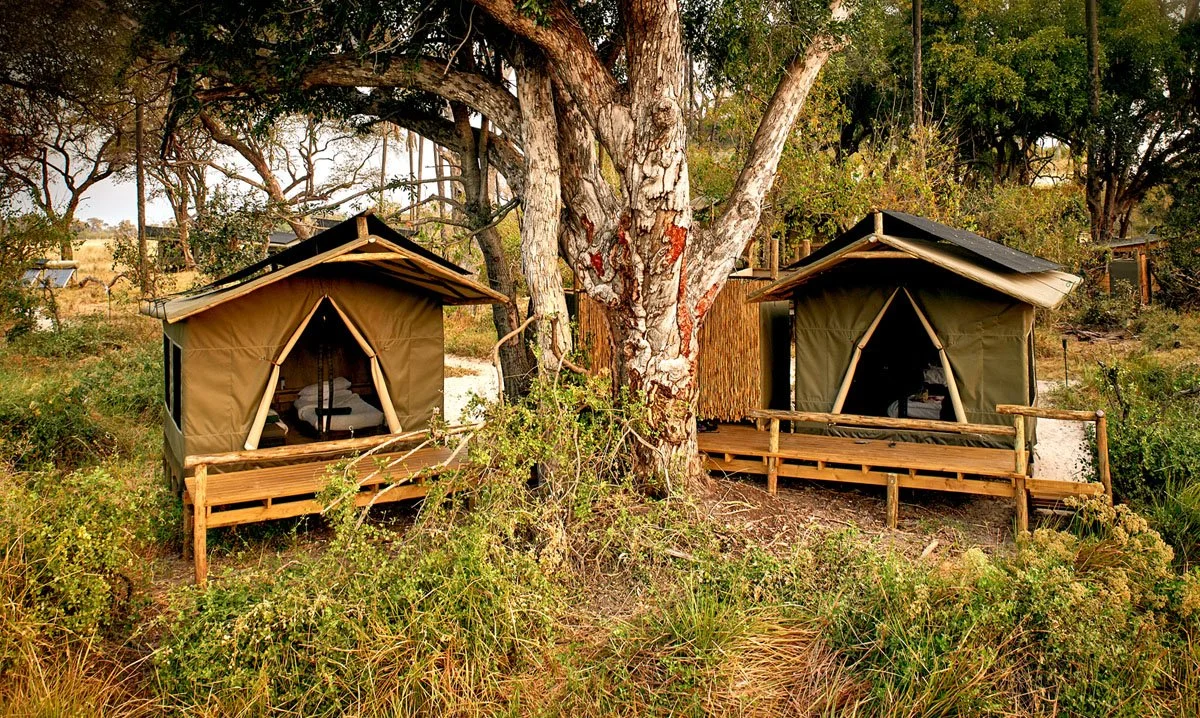
Oddballs' Camp sits just off Chief's Island, deep in the Okavango Delta, with a raised deck looking out over the Boro River. It keeps things simple on purpose.
There are no engines, no glass walls and very little between guests and the Delta itself. This guide covers what a stay looks like, from the flight in to the last evening on the deck.
Getting there
Oddballs' Camp is reached only by light aircraft. The flight from Maun takes around 20 minutes and crosses the Delta at low altitude, so the first views of the channels and islands come before landing. A private guide meets each group at the airstrip.
Small aircraft mean strict luggage limits. Each guest may bring 20 kilograms in total: 15 kilograms of main luggage and 5 kilograms of hand luggage. Hard-shell suitcases and bags with rigid frames are not permitted, so a soft duffel bag is essential.
The camp
Oddballs' Camp hosts a maximum of 28 guests. Each room is a 3 by 3 metre canvas tent raised on a wooden deck and shaded by the trees. Every tent has its own en-suite outdoor bathroom with a traditional al-fresco bucket shower, filled with hot water on request. A private deck at the front of each tent looks out into the bush.
Most of the day happens in the shared spaces. The raised deck over the Boro River is the heart of the camp, and the place most guests gather at sunset. A satellite viewing deck gives a higher vantage point over the floodplains. Between activities, hammocks in the chill zone and a small library with chess and board games fill the slower hours.
A day at Oddballs'
The Delta sets the schedule. Guests head out in the cool of early morning, when animals are most active and the light is soft. They return for a late breakfast, then rest through the midday heat.
The afternoon activity starts once the heat eases and runs until the light begins to fade. Evenings bring dinner, conversation and the sounds of the Delta after dark. Hippo call from the river and frogs fill the reed beds.
On the water
The mokoro sits at the centre of life at Oddballs'. Each guide poles a dugout canoe with a long ngashi pole, carrying no more than two guests at a time. The canoe sits low in the water, just above the lily pads, so reed frogs, kingfishers and grazing red lechwe appear at eye level.
What a mokoro trip looks like depends on the flood. When water levels are high, guests glide along the channels and hop between islands for short walks. When the water drops, usually from October, the mokoro crosses the main channels into Moremi Game Reserve, where walking takes over.
There are no motorboats at Oddballs'. The silence is part of the experience, and it keeps the camp's footprint on the Delta small.
On foot
Walking safaris explore the islands with a private guide. On foot, the focus shifts to the details: fresh tracks, the shape of a termite mound, a bird call the guide can name before the bird appears.
For guests who want more time in the wilderness, half-day and full-day picnic excursions go further than the usual morning or afternoon activity.
A night out in the Delta
Between April and October, when water levels allow, guests on longer stays can join an overnight mokoro trail on Chief's Island. These private camping trips last a minimum of two nights, with a night in the main camp before and after.
The Oddballs' trail is the most hands-on of the three camps' trails. Guests help the guide pitch small dome tents, gather firewood and cook over open coals. Mattresses, sleeping bags and towels are provided, but guests bring their own soap and shampoo. Days follow the same rhythm as camp, with walks at dawn and in the late afternoon, and long, quiet hours in between.
Everything carried in is carried out. Ashes are buried, and each campsite is left as it was found.
Power and connection
Solar panels power Oddballs' Camp and heat its water. There are no generators humming in the background. The camp is built to disconnect, and most guests find the Delta fills the space that a phone would normally occupy.
Families
Oddballs' welcomes children of all ages. Two family units give parents and children room together, and the kitchen can arrange earlier dining times and simpler meals for younger guests. With a private guide assigned to each group, families set their own pace on the water and on foot.
What to pack
Pack light and in layers. Lightweight cotton or quick-drying clothing in neutral tones such as khaki, olive and brown works best in the bush. Bright colours stand out to wildlife, and camouflage or military-style clothing is not allowed in Botswana.
From May to September, early mornings and evenings are cold, so a warm jacket, beanie and gloves are worth the space. From October to April, a light rain jacket or windbreaker helps with afternoon storms. Closed walking shoes, a sun hat, binoculars and a headtorch complete the essentials. Laundry is done by hand in camp, weather permitting, which makes a small bag go further.