

What Is A Mokoro Safari In The Okavango Delta?
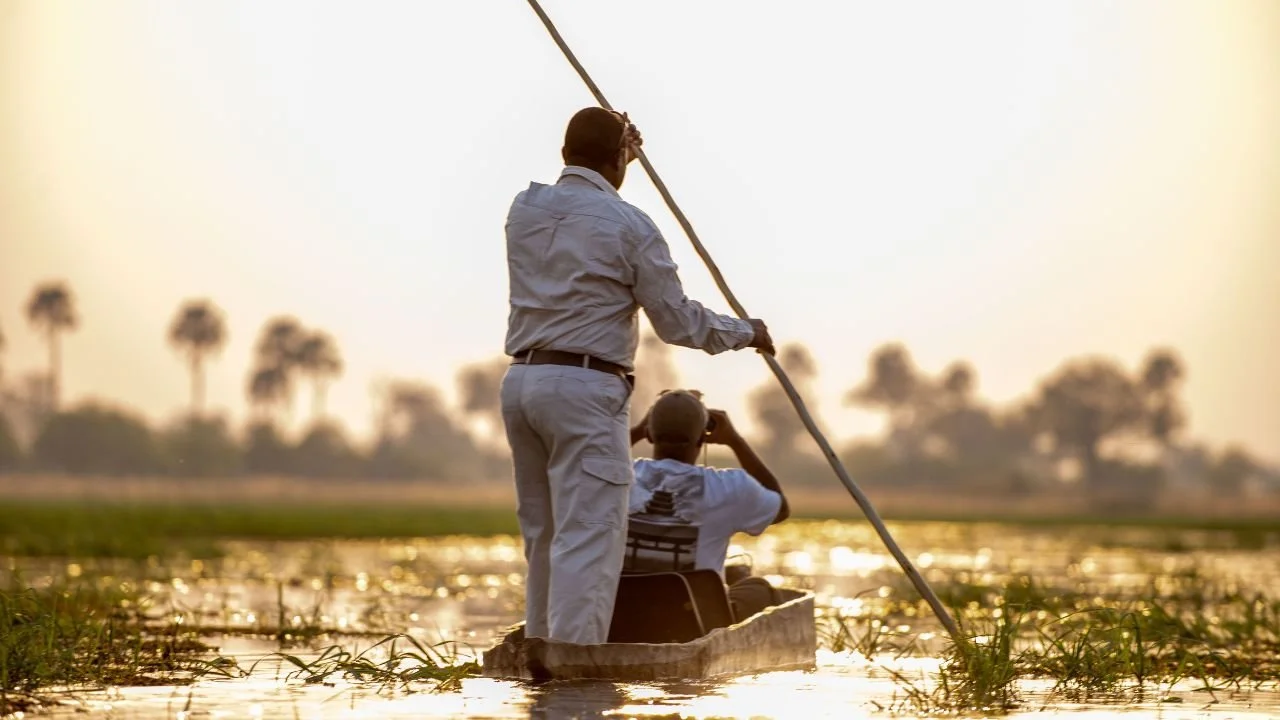
Nkashi Poler On a Mokoro.
The Okavango River flows down from the highlands of Angola annually between May and August, emptying directly into the dry sands of the Kalahari Desert. This makes the Okavango Delta (a UNESCO World Heritage Site) unique from most river deltas, as it is an inland delta. Situated in north-western Botswana within the Ngamiland region, the Okavango Delta is home to some of the world's most fascinating mammals, birds, reptiles, and amphibians.
What Is a Mokoro?
A traditional mokoro safari is the most sustainable and eco-friendly way to explore the Delta. It offers an intimate wilderness encounter with minimal environmental impact, allowing guests to immerse themselves in its natural beauty while preserving a fragile ecosystem. The mokoro is a traditional, flat-bottomed dugout canoe native to this inland water system, specifically designed to navigate shallow channels.
A marvel of African craftsmanship, the traditional mokoro is hand-carved from a single trunk of a large indigenous tree, most commonly the African Ebony or Kigelia africana (frequently referred to as the "sausage tree"). Highly skilled artisans spend weeks hollowing out and shaping a single log into a balanced, narrow-hulled canoe built to withstand the Delta's shallow floodplains for years. These hand-crafted vessels hold deep cultural value in Ngamiland, each carrying its own weight, natural curve, and unique character. A traditional vessel typically accommodates two forward-facing passengers. The experience is both intimate and mesmerising, placing passengers at eye-level with a landscape so expansive it can feel almost overwhelming.
The Nkashi Operators: Heritage & Eco-Literacy
Historically, the mokoro was used by the Bayei and Hambukushu people for fishing and transport through the Delta channels. Engineless, silent, and without oars or sails, the craft is gently propelled and steered by a standing guide, referred to as a nkashi operator or "poler", using a three- to four-metre-long wooden pole called a ngashi.
Nkashi operators work unarmed, relying on environmental awareness and a deep understanding of animal behaviour to maintain safety. Skilled in tracking by sight and sound, as well as reading water depth, they serve as both captain and wildlife guide. This mastery of the waterways is an ancestral heritage passed down through generations by oral storytelling, daily practice, and hands-on experience.
More than steering techniques, elders pass down eco-literacy: identifying bird alarm calls, recognising shifts in hippo pathways, and understanding which plants offer medicinal or nutritional value. This is a body of knowledge rarely found in textbooks. Operators read water ripples, surface bubbles, and channel depth to maintain a safe, respectful distance from hippo pods, understanding that an eye or ear peeking above the waterline demands healthy respect.
The Water-Level Experience: Micro-Ecosystems & Big Game
While 4x4 game drives offer a wide-angle view of the savannah, a mokoro safari focuses on delicate micro-ecosystems. Sitting just inches above the waterline, the Delta transforms into a multi-sensory landscape framed by tall papyrus reeds up to 3 metres high. The craft glides silently past reed heads, immersing passengers in the earthy scent of fresh vegetation and channels carpeted with blue and white day-blooming water lilies.
In the quiet of a water safari, details often missed from a vehicle come alive: painted reed frogs calling from grass stems, jewel-toned kingfishers hovering above shallow water, and African Jacanas walking across floating lily pads.
The gentle nature of a mokoro safari does not exclude big game. Sitting low on the water offers a breathtaking perspective on larger wildlife. Watching an elephant family cross a shallow channel at eye-level is an awe-inspiring encounter impossible to replicate from a vehicle. Aquatic antelope, such as the Red Lechwe, leap effortlessly through shallow depths, their splayed hooves perfectly adapted to muddy channels.
Seasonality & Water Levels
The Okavango Delta's water cycle is a dynamic, year-round event. Rainfall in Angola takes months to travel through the river network, reaching the Delta's upper reaches in autumn (March to May) and spreading slowly south into winter and spring (June to October). The Delta is exceptionally flat, dropping only approximately 60 metres across 15,000 square kilometres. Water spreads across channels and floodplains at a walking pace of roughly 1 kilometre per day, reaching central and southern regions (such as Maun and Moremi) between June and August before receding in September and October.
Because of this natural rhythm, there is no "bad" time for a mokoro safari; each season simply highlights a different aspect of the landscape.
Peak Flood Season (May to September)
Cool, dry winter weather coincides with the arrival of Angolan floodwaters, filling shallow channels and lily lagoons across the region.
The Experience: Access is at its most extensive, allowing ngashi operators to cover vast distances purely by water. Floating through infinite, papyrus-lined mazes under clear skies offers classic Delta scenery. Sunlight filters through feathery papyrus heads onto glassy channels reflecting open horizons. Expansive lagoons emerge between reed beds, dotted with water lilies whose flowers open to the morning sun. The stillness is broken only by the soft dip of the ngashi pole.
Best For:
Poling across vast floodplains that remain dry during the rest of the year.
Navigating deep into undisturbed core areas inaccessible by vehicle or on foot.
Following winding corridors and open water bodies for extended, multi-hour excursions.
Enjoying clear, sunny days with comfortable winter temperatures and low humidity.
The Low-Water & Green Season (October to April)
As floodwaters recede, the arrival of summer rains transforms the surrounding landscape, turning it lush, green, and full of life.
The Experience: As water levels fall, poling routes consolidate into permanent, deep-water channels. Lower water exposes islands and floodplains, allowing operators to easily nose their mokoros ashore for guided island walks. Excursions typically pair quiet morning poling along lily-lined channels with on-foot tracking of wildlife. Lower water also concentrates fish populations into main channels, attracting dense flocks of migratory waterbirds.
Best For:
Combining quiet water gliding with guided tracking on foot across newly exposed islands.
Spotting dense concentrations of migratory waterbirds and fishing species along deep channels.
Poling through vibrant, green landscapes during the birthing season of plains game.
Enjoying the waterways during a peaceful season with minimal channel traffic.
Practical Guest Tips for a Mokoro Safari
To make the most of your time on the Delta waterways, a little preparation goes a long way. Because you sit low in an open vessel for extended periods, packing and behaving with the environment in mind ensures both comfort and safety.
What to Pack & Wear
Neutral, Lightweight Clothing: Earth tones (khakis, tans, and muted greens) blend naturally into the reeds and are essential if your ngashi operator leads an island walking safari. Avoid bright colours and dark blues or blacks, which can attract flies.
Sun Protection: The reflection off open channels intensifies sun exposure. Bring a wide-brimmed hat with a chin strap, high-SPF sunscreen, and polarised sunglasses to cut water glare and spot aquatic life beneath the surface.
Waterproof Protection: A dry bag or waterproof pouch is invaluable for protecting cameras, phones, and binoculars from accidental splashes or morning dew.
Binoculars & Compact Cameras: Opt for lightweight, compact optics. High-magnification lenses can be difficult to stabilise on the water, while lightweight pairs allow quick adjustments to spot kingfishers or distant wildlife.
Etiquette & Safety on the Water
Keep Still and Balanced: Traditional mokoros have a low centre of gravity but respond to sudden weight shifts. Keep your weight centred, avoid leaning far over the gunwales, and move deliberately when adjusting equipment.
Keep Hands Inside the Boat: Refrain from trailing your hands or feet in the water, regardless of how clear or shallow it appears.
Respect Silence: The true magic of a mokoro safari lies in its tranquillity. Speak in soft, low tones so as not to startle wildlife or disrupt the natural soundscape.
Trust Your Operator: Ngashi operators are master navigators with years of ancestral knowledge. Follow their instructions immediately and quietly, particularly during encounters with hippos, elephants, or when stepping ashore for island walks.
The Timeless Rhythm of the Okavango
A mokoro safari is a fundamental shift in perspective. Moving at the speed of a hand-hewn pole dipping into clear water, the frantic pace of the modern world fades away. You are not merely observing nature from a distance. Sitting just inches above the waterline, guided by the ancestral wisdom of your ngashi operator, you become part of the water's flow.
In a world that rarely slows down, floating through these ancient, papyrus-lined channels offers a rare return to silence, presence, and pure wilderness.
Begin Your Okavango Journey
Whether you dream of navigating the vast, flooded lagoons of the peak flood season or combining quiet poling sessions with guided island walks, an authentic mokoro experience awaits.