

Thirty Years, One Village
Lodges of Botswana Delta Camp
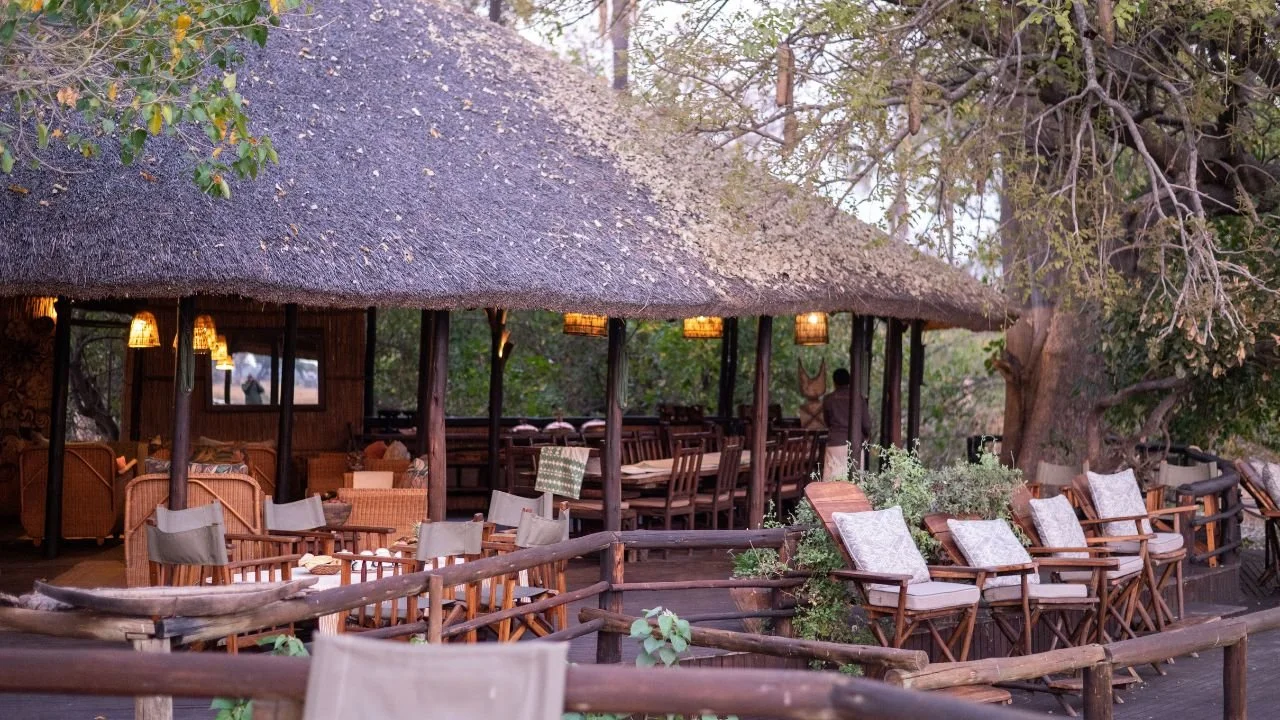
There is a tree at Delta Camp with a roof built directly around it. Nobody moved it, cut it back, or worked around it as an afterthought. The building grew to accommodate something that was there first. It is a small, quiet decision that says everything about how we operate. The Okavango Delta does not adjust to the camp. The camp adjusts to the Okavango Delta.
The Premise: Choosing How Much to Disturb
The Okavango Delta existed before Delta Camp. In its pristine form, it predates modern tourism, and every human intervention (however careful) has come at some cost to that environment. The camp was built on the acknowledgement that a building can never improve on the landscape it sits in. It can only choose how much it disturbs.
No glass in the windows: Structures are entirely open to the elements, welcoming the sounds, breezes, and rhythms of the bush.
Elevated decks: Structures are raised on wooden platforms, so the earth, roots, and vegetation are left largely undisturbed.
Local materials: Reed and grass, grown locally, make up the bulk of the construction. Where that isn't feasible, canvas is used because it can be removed without leaving permanent scars.
Handcrafted furnishings: Furniture comes from local materials and local hands, keeping the supply chain intimately tied to the community.
Silent power: Solar arrays power the camp. While they are no one's idea of aesthetic perfection, they represent a trade-off nobody regrets: no fuel tankers grinding across floodplains to feed diesel generators, and no mechanical noise disrupting the natural soundtrack of the Delta at night.
This is a set of hard trade-offs, made explicitly and revisited constantly. Every pro is weighed against its con, with guest comfort held to the highest standard the environment can sustain, rather than the highest standard money could otherwise buy.
The Village Nearby
Thirty to forty-five minutes from camp sits Sedibana village. The relationship between Delta Camp and Sedibana is three decades old, and it shows in the kind of detail that cannot be manufactured for a brochure.
Camp staff have consistently stepped up to help arrange nursing care for villagers, coordinate veterinary assistance, and provide transport to and from Maun for people who would otherwise have no reliable way to get there.